Foliart logo
Phytomodulators and organo-mineral complexes

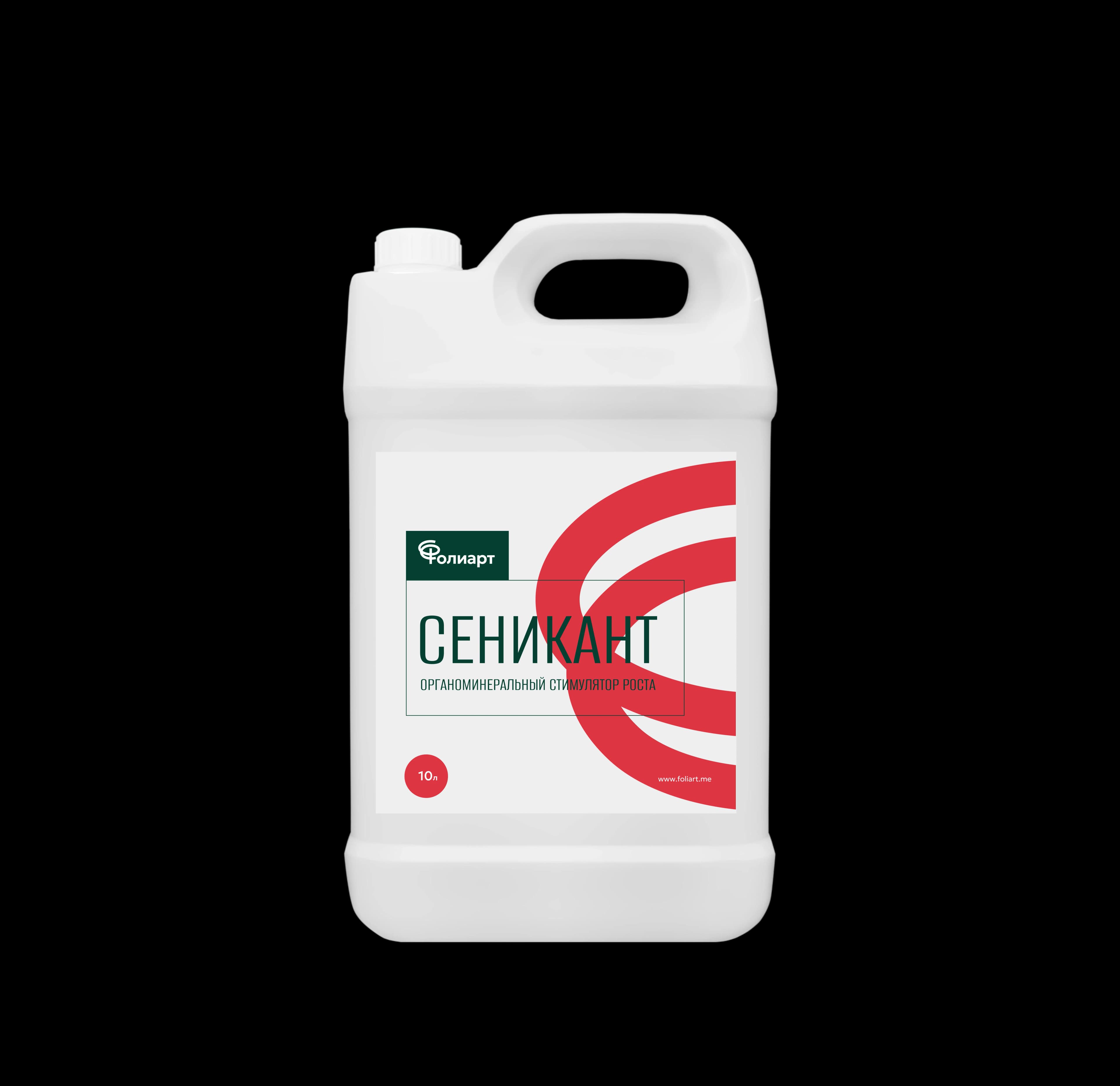
SENICANT

SENICANT

Designed for forced translocation of sugars and photosynthetic products from leaves to fruits, seeds, tubers, and root crops. Under conditions of abundant rainfall and low temperatures, it is used to accelerate ripening processes without compromising product quality. In areas with a risk of damage from low winter temperatures, it is applied after harvest to redistribute photosynthetic products from the leaf apparatus to next year’s buds, wood, and roots, increasing sugar content and concentrating cell sap. Not recommended for use on perennial crops under conditions of heat stress or risk of sunburn due to possible damage to the leaf apparatus.


Learn more
Ask a question

The product is compatible with most fertilizers and crop protection products. Mixing with copper- and sulfur-based products in the same tank is not allowed. A compatibility test is required before use.

Composition

  • Nitrogen20 g/L
  • Phosphorus50 g/L
  • Potassium50 g/L
  • Sulfur10 g/L
  • Magnesium4 g/L
  • Boron5 g/L
  • Zinc2 g/L
  • Mo, Fe, Cu, Mnnot more than 5 g/L
  • Amino acidsnot less than 10%
  • Complex of vitamins, phytosteroidal and prohormonal compounds of organic origin (including arachidonic acid, salicylic acid)not less than 1%
Certificate of conformity

Advantages of SENICANT

  • Organo-mineral growth stimulant.
  • The mode of action is based on the stimulation of enzymatic reutilization pathways.
  • Enhances the conversion of reserve nutrients into structural (plastic) substances.
  • Accelerates ripening, reduces nitrate content in fruits, and at late stages of development of perennial crops stimulates the translocation of sugars and amino acids from the leaf apparatus to buds, wood, and the root system.
  • Increases sugar content in fruits and root crops.
  • Used as a stimulant for the resumption of vegetation after prolonged stress.
  • Applied as a senicant prior to defoliation.
  • Not a herbicide and does not contain synthetic hormones; therefore, it does not cause premature leaf drop and can be used during the growing season for staged harvesting.
  • The use of the product is not permitted when clear signs of nitrogen deficiency in plants are present.

Application guide

Grapes, apple, pear:

1 L/ha with a spray solution volume of up to 600 L/ha, 1.5 L/ha with a spray solution volume of 700–1000 L/ha

Berry crops, stone fruit crops:

1 L/ha with a spray solution volume of up to 500 L/ha, 1.5 L/ha with a spray solution volume of 600–1000 L/ha

Maize, sunflower, forage grasses, rapeseed:

1 L/ha with a spray solution volume of 200–400 L/ha

Field-grown vegetables:

1 L/ha with a spray solution volume of up to 300 L/ha

Protected cultivation vegetables:

0.5 L/ha with a spray solution volume of up to 300 L/ha

Melon crops:

1 L/ha with a spray solution volume of up to 400 L/ha

Winter wheat, winter barley, winter triticale:

0.5 L/ha with a spray solution volume of up to 300 L/ha

Spring cereals, leafy greens, grain legumes:

0.5 L/ha with a spray solution volume of up to 300 L/ha

Sugar beet:

1 L/ha with a spray solution volume of up to 300 L/ha, 1.5 L/ha with a spray solution volume of 400 L/ha

PLANT NUTRITION SPECIALIST

Arseniy, plant nutrition specialist

Expert help in choosing fertilizers

Arseniy

Our highly qualified specialist analyzes the soil and determines its chemical composition. Based on the results, Arseniy can recommend the best fertilizer for a specific soil type and crop. His knowledge of soil chemistry and nutrients helps develop tailored fertilizer formulas that improve yields and plant health while also reducing the environmental impact. He will be happy to answer your questions.